29 August 2023
Multimedia interactive experience
KOSMOS -a performance merged with a workshop
- Introduction
- Project History
- Target group
- What I want to do
- Artistic team and our goal
- Connecting the imagination to the universe with BODY, SOUND, ANIMATION and LIGHT.
- The Structure of the workshop/show
- Creating a soundscape to support the imagination
- Meeting children with function varieties
- Scenography and projected graphics/animation to enhance an immersive experience
- Marketing strategies, reaching out to regions, sustainable touring plan
- Time plan
Artistic team:
Concept/director/choreography: Rumiko Otsuka
Dance/choreography: Khamlane Halsackda, Nidia Martínez Barbieri, Isabella Eriksson
Manuscript: Stephanie Hayes
Scenography: Marta Cicionesi
Sound design/composer: Cora Onori
Music/Rap songs: Moncef Henaien
Music/producer: Francisco Ulloa
Animation/visual design: Amanda Casanellas
Lighting design: Imre Zsibrik
PREMIERE: 7th September 2024
Performances: 7, 8, 21, 22 September at Barnens Scen
Introduction
This project is inspired by my own children, and my motivation to aid young people who are affected by extreme anxiety. We live at a time where the diagnosis of anxiety becomes more frequent and this drives me in wanting to help children find confidence in their abilities and in trusting others. I am looking to ignite their imagination and help them find new ways for gaining knowledge, to encourage wonder about the universe as a way to value life and living, and to empower children with a sense of hope for their future by allowing them to activate their body and mind.
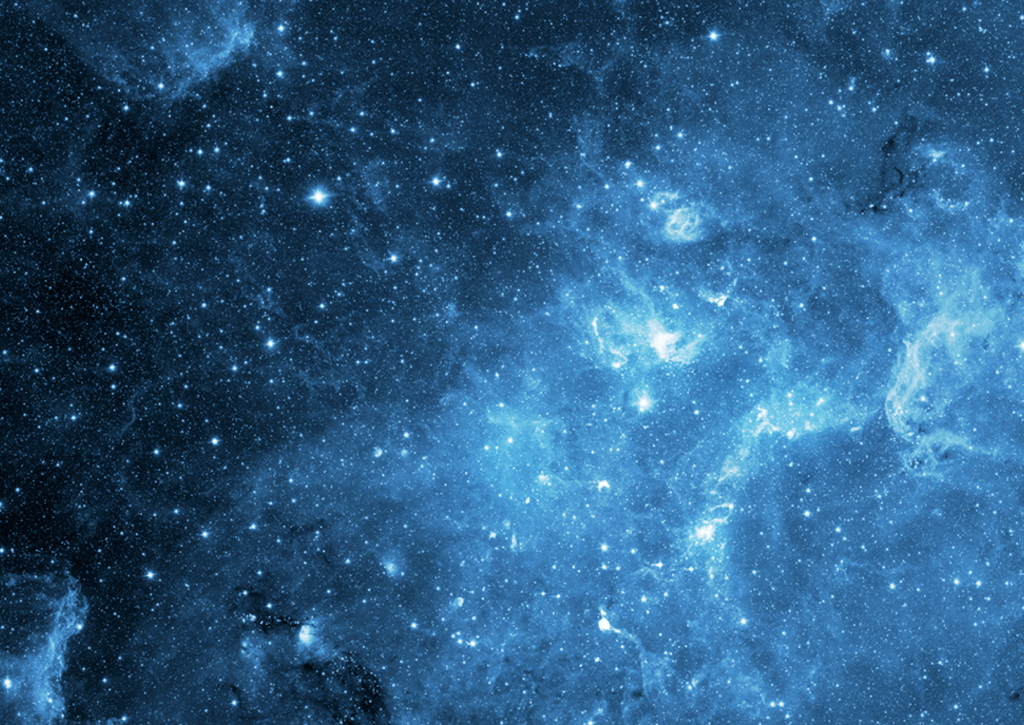
Project Kosmos is both a dance performance simultaneously merged with an educational workshop. This unique combination made for the stage teaches children about our solar system and the universe through creative movement and dance. Taking advantage of a theatre/black box environment with the scenography, soundscape and lighting, we immerse the participants within a dangerous and beautiful representation of space, stars and galaxies.
Our desire is to help young children connect with a profound sense of how they are tied to the universe in which they live, for them to understand that they are not so different from each other, that they are made up of the same elements and share one united home: the universe. Through encouraging their imagination the children will turn into specks of dust after the big bang, transform into giant energised burning stars, journey through our solar system from small scorching Mercury to the icy Asteroid belt, where they can leap around on the pieces of frozen rocks in Saturn’s rings, and watch a duet of the Sun and the Earth translated by the bodies of dancers.
This project provides an enjoyable way with which to allow creative access to the mind and body through playing physical games. By building new ways for young people to connect with their bodies, we give new perspectives on how to take in information. The parallels we find between the body and the universe become bridges for children to move through space, experiment with physics and learn about what both their bodies and the vast universe is capable of.
Humans, animals, plants, stars and everything in this universe are all made of the same six essential elements. Kosmos is a place to come and realise this together.
Project history
Previous research was achieved with dance artists Nidia Martínez Barbieri, Khamlane Halsackda, Isabella Eriksson, and composer/singer Miranda Gjerstad, funded by Kulturrådet, Kulturens studieförbund, Malmö stad and Nya Rörelsen.
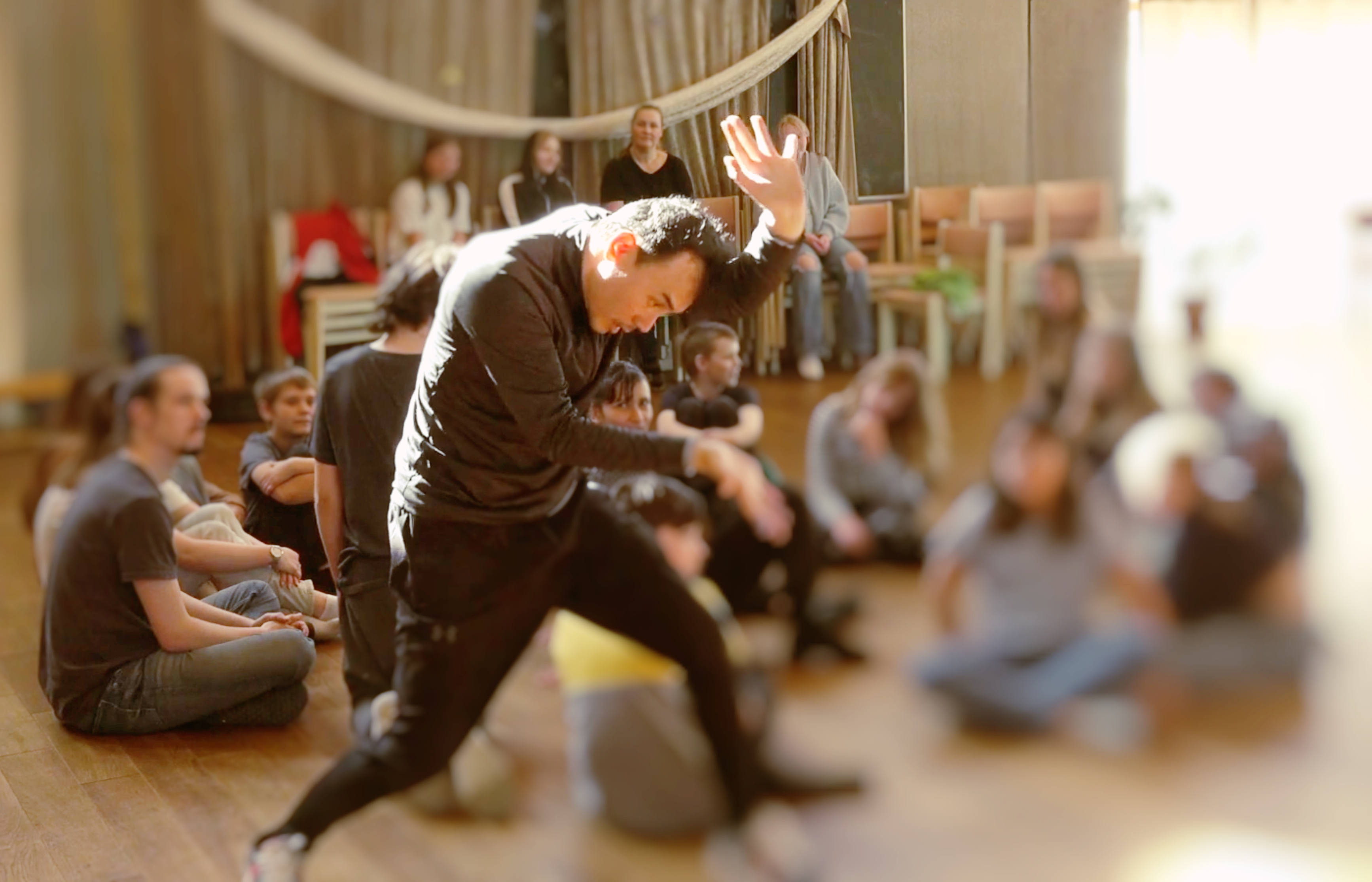
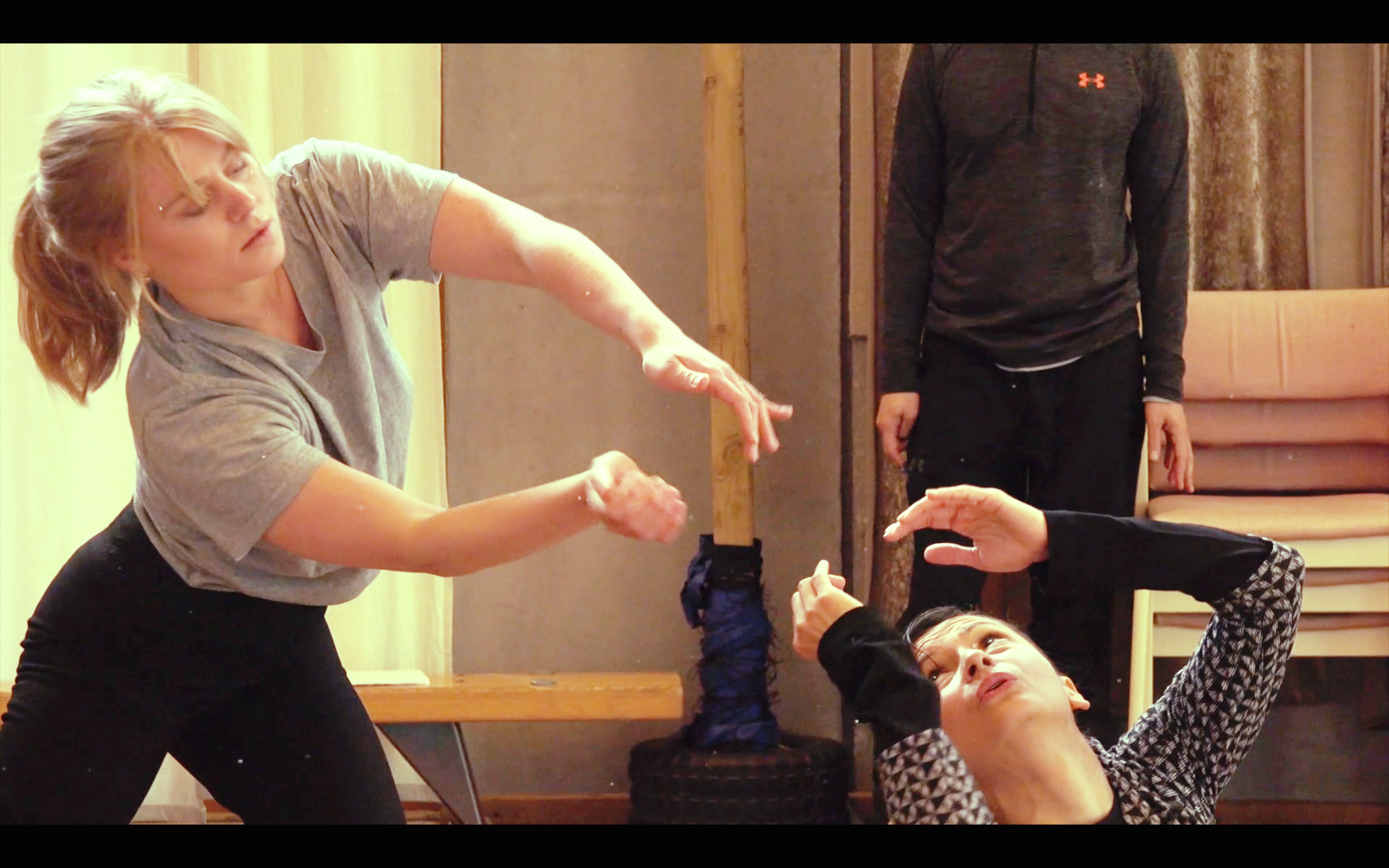
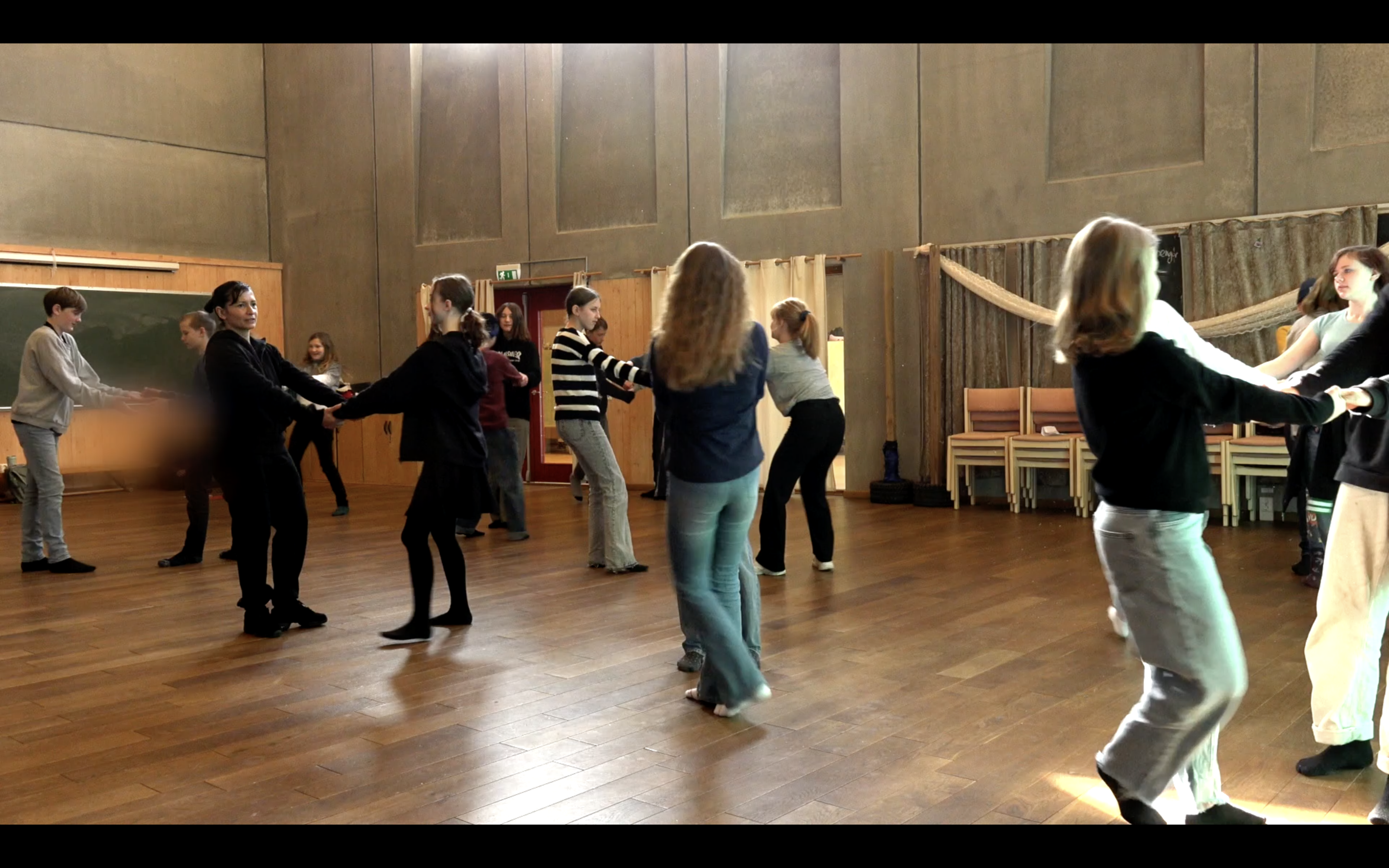
Through our immediate involvement with 2 pedagogs from Tyco Brahe Observatory, we were able to deepen our knowledge according to the themes of this work, helping us to settle on what we felt would resonate the most with the participants. The next step was to meet these themes through movement research. We developed solos, duets, ways of interpreting via the body, how to work on your own but also as a group, we found fun exercises and games to guide the children into moving their bodies. We discovered that we could tie in the language of science into describing how the participants could explore, using metaphors around energy and physics as a way in, to help them relate the body with its ability to embody their imagination of things in the universe. Lastly, we created a narrative by landing on a philosophical message and using this as a red thread: We reminded the children that they were in a room, in a building, on a street, in a town, in a region, in a country, on a planet, in a solar system, in a galaxy. That all of us exist in this immense universe. Something we felt gave them a sense of the profound.
It was a priority for our research to take our ideas out to test with the target participants. We viewed it as crucial to involve them in helping to evolve our ideas and directions from the beginning, watching how they interacted and experienced with the content we provided. What we have achieved so far is partly shaped by learning from these participants that took part. Our research included five test workshops with children aged 5-12 in the spring of 2022. After each workshop, we reworked/edited thoroughly based on what worked and didn’t, and also with the help of real feedback from the children. In spring 2023, Malmö stad funded the project to give workshops in different libraries throughout the year and to meet diverse groups of children. At the same time, I have contacted Allaktiviteshuset in Lindängen, Malmö to provide workshops at Lindängen särskolan. I aim to create a performance/workshop accessible to all children, including those with function varieties. Through the collaboration with Lindängen särskolan in autumn 2023, I will not only deepen the current research but formulate a readjustment to the workshops to especially spotlight this area of creative education and inclusion of those with function varieties.
Moving onwards from here, we look to take our performance workshop, now formed into the frame/structure of 45 minutes, and develop it further into a more complex and detailed phase that will include scenography, specially created animated technology/projections, and soundscape experiments with multiple speakers and a subwoofer, allowing for the project to be even more immersive and therefore engaging.
Target group
As a child, I was always attracted by the mystery of the universe and the astonishing beauty of stars and planets. I used to visit the planetarium and loved to feel nearer to the sense of how vast the universe is. Imagining how it would be to travel through space to see all those wondrous planets and galaxies. Even today, and having met with many children through the research, it remains a significant fascination that really captivates their imagination, something I would like this project to take full advantage of. In contrast performing arts, and especially dance, has always found it challenging to reach a younger audience and even more difficult to reach children with function varieties. The project’s core belief is that our theme is very relevant to young people, a way into being introduced to creative dance, attracting them to perspectives of thinking, seeing and activating their bodies, getting in touch with both the possibilities of the universe and what their bodies are also capable of. This is a play between their imagination, igniting this so they can learn facts about this universe but more importantly to initiate a sense of connecting with themselves and how their physical bodies can react in the world and the environments that they currently live, a means for generating confidence and empowerment by playing.
Initially, I targeted a group of 4-6 graders but have since tested children from F-3 graders, and these workshops are especially successful. An interest in the universe and space was significantly higher among these younger children. We learned that some information was too advanced and challenging and decided to adjust and reformulate particular terminologies and advanced information, paying attention to how our communication with them as teachers and performers could help them more easily understand. This isn’t to say we do not want to challenge them, this is more about finding a balance between how these performance workshops can keep both educational information and creativity to work in the best way, that can allow the children to rarely be bored and keep energetic and focussed. By doing this we managed to open up the target group ages, and we will continue to work with this age as well in the next phase of KOSMOS.
My daughter is diagnosed with autism and ADHD and this sparks in me a very strong motivation to fully understand what it means to focus on the specific needs of a child when considering physical and mental capabilities. When she was young, I used to take her to dance and theatre performances or concerts for children, but felt uncomfortable being in the theatre with her because it was never easy to make her sit until the show’s end. Also these show’s did not take into consideration children with her special condition, and this did not help her. In one of the Kosmos workshops in the spring, I experienced one participant with function varieties, where his assistant quickly gave up at the beginning of the workshop and left the room, and I am eager to know why this happened? In my dance career, I have seldom seen a member of the audience to be a wheelchair user, or of other function varieties, and want to encourage that more of this community of children are allowed access as any other child. I want to pay attention to creating works and a space that considers their way of experiencing, feeling, connecting and expressing what these shows mean to them. I want to give them a chance to feel welcome, secure and embody their time fully in the theatre environment through being provided a show that takes their special needs into consideration.
Theworkshops with Lindängen särskolan will be to help research formulating our workshops for children with function varieties and through these we will be able to decide which age group to focus on. What we already take into consideration now are some vital questions: How can the workshop/performance content be arranged in a way that can suit the different abilities of the child? What additional help must the workshops be given in terms of assistance and interpreters? How must the space we work in be dealt with to make things accessible and safe?
After these workshops with Lindängen särskolan in the autumn of 2023, the project plans on settling on a structure and strategy for the show, one that is flexible in terms of how our dancers guide participants, what sound files to use, what visual content etc, so that each performance/workshop will always be adjustable according to the participant’s special needs: their age group and function abilities. It is already clear to us that we will invite them to a specific group for only ‘function variety’ children to encourage a sense of safety, so that we can provide a unique version of the show/workshop formulated for them that can best provide the fullest experience.

What I want to do
Artistic team and our goal
Concept/director/choreography: Rumiko Otsuka
Dance/choreography: Khamlane Halsackda, Nidia Martínez Barbieri, Isabella Eriksson
Manuscript: Stephanie Hayes
Scenography: Marta Cicionesi
Sound design/composer: Cora Onori
Music/Rap songs: Moncef Henaien
Music/producer: Francisco Ulloa
Animation/visual design: Amanda Casanellas
Lighting design: Imre Zsibrik
Sign language interpreter
Audio interpreter
We aim to premiere at Barnens scene in autumn 2024, followed by performances in Kristianstad (Barbacka kulturhuset) and Helsingborg (Dunkers kulturhuset). The show will be 45 minutes, and the audience will be categorised into three groups; 6-9 years old, 10-12 years old, and a group for function variety children. This way, the performers will know beforehand which approach to plan for, choose and provide the necessary guidance and information.
I will collaborate with dancers; Khamlane Halsackda, Isabella Eriksson and Nidia Martínez Barbieri, the same dance artists included in our research period in 2022. We will enhance and refine the workshop structure, choreography and content. Reconnecting with the children who took part in our research, but also reaching out to new participants.
Connecting the imagination to the universe with BODY, SOUND, ANIMATION and LIGHTS
ON-BOARDING (a pre show moment): The workshop/performance is based on a journey into space. We gather the participants and provide parallels of learning that can connect them to both what it means to be a group warming up their bodies, and how this relates to a crew on a space rocket. We talk about teamwork, how to focus on safety, we draw them into the beginning of a physical and imaginary journey. We take them ‘on-board’ so from the beginning they are immediately learning information about the universe they are going to explore, and more importantly their place within the universe: We are made up of the same 6 compounds that everything else in the universe is also made up of. And this is used as the basis for why they can transform their bodies into a raging sun that is like a party ball of energy kicking, jumping, throwing out solar flares.
The show then commences and is made up of scenes that can establish a progression of this journey into space, and using this same approach of accessing the physical use of bodies and how this can simultaneously be tied to ideas and information about the universe. This is a big part of encouraging the participants with ways to play physically and to use their imagination so that they can absorb all sorts of information about their bodies and the universe in a much easier way. Consistently the dancers that are leading the show are always there to guide, provide clarity, reading the room and what may be needed energetically to help the participants.
The structure of the workshop/show
- We welcome the participants. Explain to them that we are embarking on a journey. We gently warm them up so they are already introduced to coordination, musicality and some qualities of movement. This part also allows us to help them feel safe and secure with us and each other. A chance for all of us to introduce our names and meet. This would happen in another room, before we go in and onto the stage to generate a sense of excitement and anticipation.
- BODY: The participants are taken onto the stage with their eyes closed. They arrive at the beginning of the universe and the sound of ‘the big bang’. They hear the voice of the universe, and this establishes the rule of the game. The voice guides them through the journey of physical tasks. It informs them that they must look and listen to the physical guides of this journey (the dancers). SOUND: I will work with a sound designer to create the sound of “the big bang”. We researched how to express a powerful explosion that doesn’t frighten but sparks curiosity and anticipation. This will consist of mixing different types of sound to create a layered feel, using multiple speakers to create depth and distance, a travelling of sounds, including a deep bass by using a subwoofer. The subwoofer will also help children with hearing or visual disability to physically feel the presence of the sound through vibrations.
- BODY: We do a physical exercise expressing “the birth of the star”. Children will metaphorically become particles in space, let them imagine and experience the physics of collisions and gravity through giving and supporting each other’s weight. This playful partnering exercise will teach children to work together physically, trust and care for each other. The children make circles that turn around at different speeds, hand in hand, meeting with pushing against other groups, like particles clustering, then they will gather and make a mass group where they reenact the kicking, throwing wild energy of a burning star. They experience the fusion reaction of a star by moving their bodies explosively, quickly or sharply. The whole room will be filled with energetic actions. SOUND: The background sound will be composed to support the exercises and express a feeling of movements of tiny particles travelling in the room and finally becoming an energetic and steady burning star.
- BODY: The children will sit about at the edges of the room/stage and watch a short duet by dancers. This is the first time they will be able to see the dancers perform, and this will help them connect to what a performance is and how the qualities they are exploring can be done. The duet represents the sun and the earth. We express; how the sun’s light and heat give us life, the sun rises and sets according to its orbit, and how the earth’s magnetic field protects us from the sun’s harmful rays as well as creating the beautiful northern lights. We also explore praying from different perspectives, touching on how different cultures have felt towards the sun throughout history; ancient people believed that the earth was the centre of the universe and the sun was orbiting around the earth, and many religions worshipped the sun as a god, goddess or deity. SOUND: The composer will create a hip-hop song based on this Earth/Sun duet and the text is drawn from our previous research which we will now continue to develop. It will help give the children information about the Earth and Sun. The lyrics will be more playful to help this information be catchy and easy to absorb, and the choreography will be related to the words and the song’s rhythm. ANIMATION: During the duet, we will project an image on the wall created by our animator. The lighting and projection will support the story of the Sun and Earth, their scientific relationship, the aurora lights and life on Earth.
- BODY: We arrive at the planet Venus. The dancers talk to the children about the environment of Venus. Then, they guide the children to move their bodies and express these different elements of Venus. We try to walk in the dense and extremely hot Venus atmosphere, teaching them that the planet’s axis is vertical, and getting them to be as vertical as they can with their bodies. Revealing how long it takes for Venus to orbit around the sun, and getting them to imagine being a rock dissolving under Venus’s rain of sulphuric acid. We are mindful to explain complex scientific terms such as carbon dioxide or sulphuric acid with visual help, and children can experience what those words mean by dancing/moving and accessing sensations of the body to easily take in the scientific information. After they have done Venus movements, we show them a Venus solo with one of the dancers. SOUND: Here we will also have a rap song explaining the facts about Venus. Each song should have different modes to express the planets. Venus is the size of the Earth, and it’s called the sister planet of Earth. Still, Venus’ harsh environment is not possible for any life to survive, and the thick atmosphere of carbon dioxide causes a greenhouse effect, similar to the problem our Earth is facing right now. We want to put all this information as well as create voices or perspectives of the planet in the song. ANIMATION: We’ll develop a scene with animated images on projection and a miniature Venus planet to explain. We’ll test a small Bluetooth speaker in the miniature Venus.
- BODY: Next, we arrive at Saturn. We stand ourselves on the ring of Saturn, making a huge circle with the children. We explain to them what this ring consists of and tell a story of the stormy and giant gas planet Saturn. We teach a short dance sequence together as we dance on Saturn’s ring. The facts about Saturn inspire all the movements; jumping and dancing through the ring’s icy rocks, diving into Saturn’s stormy weather and arriving at its metal core. This rhythmical dancing section looks to create something fun and joyful. ANIMATION: Here we will research the possibility of scenography by using animation, and projecting Saturn on the floor, or using special luminous paint that can play with specific lighting.
- THE GAME: Here we will play a game, and the rule is to do and remember instructions the “voice of the Universe” proposes (where the leading dancer’s demonstrate). The words are a collection of all the things throughout the workshop that they have been told, and these are reminders of those things; “axel rotation”, “the sun and the planets”, “comet”, and “asteroid belt”. The action explains the word’s meaning, and children physically move through the room to engage in how all the elements in the solar system move and act in space. The children must pay attention to the “voice of the universe” and what it provides. This encourages them to think and act fast, plus work together as a group to successfully accomplish the game. The section is both physical and playful, and especially created for the needs of 5-6 grader children, addressing their self-consciousness at this particular age group and encouraging ways for them to access their ability to be physically and mentally open. Regarding this the game format is very effective. The playfulness creates an easy engagement, accessing their sense of ‘game’ and freeing them from having to act as a grown-up”. Through our research this scene always caught and kept their attention.
- THE END: We ask the children to lie down or sit comfortably on the floor, making the room completely dark whilst using UV lights. Stars are painted with UV paint on the backdrop, and this is magically revealed with the lights. We listen to the voice/song of the Universe singing for us. It is a lullaby because the universe is the mother of everything within it and the words remind children of what they were told in the beginning of the performance/workshop, that everything in this universe is made of the same elements, and we share a home: this universe. The words remind them of where they are and ignites their imagination to picture themselves zooming outwards: They are in a room, in a building, on a street, in a city, in a country, on a planet, in a galaxy, and so forth. We focus on a way to help them collect everything they have learned and experienced into a profound sense of comprehending their place within this vast universe, connecting to the very concept of existence, and that even though our lifetime is as small as a speck of dust we are all still a part of the universe and it’s story. In turn, this is also a way of helping them be mindful about caring for themselves, others and every creature on Earth.
The content of the entire show will be made in order that it can be shifted/adapted according to the needs of the participants: For younger children and better accessibility the choreography is scaled back to be less complex to learn. For older children we will include more advanced astrophysical information, also adjusting the games to be more challenging. Finally, when working with function variety groups, we will focus on taking our time to provide more individual attention and guidance. with exceptional technical help.
We will also refine the manuscript with the help of playwright Stephanie Hayes. This focuses on preparing how we adjust our speaking language depending on the children we meet. In previous research, we made a recorded voice of The Universe, and want to explore creating voices for some of the planets. We will work to integrate and create a better balance between the spoken and recorded text. This collaboration with Stephanie is to pay attention to clearly expressing the arc of the show, and what may be need energetically and descriptively to invoke the imagination of the participants, keep their attention, be clear about the information given, and how this information can be worded in ways that will be easily understood yet continues to challenge.
The dancers/leaders must keep an awareness for reading ‘in the moment’ situations.Groups vary in how they may connect to the show, and this is vital for the leaders to be aware of. It is the key to understanding in the moment how something must be done and whether it needs to change accordingly. The structure is a frame to work within, but it is the energy of the participants that is more important, and the lead dancers must be able to have a constant awareness of this, and this is something we will always keep in practice.
Creating a soundscape to support the imagination
I will collaborate with rap/hip-hop singer/composer Moncef Henaien and a composer /sound designer Cora Onori and Francisco Ulloa. They will write original music, and we will work closely to create educational and fun rap/hip-hop music for some scenes. I choose this style of music because it is very popular and familiar, to help children learn, memorise and familiarise themselves with specific scientific words/terminology and in a more accessible and memorable way. The lyrics made out of information will be rhyming, mixed with funky beats and rhythms, catchy songs that stimulate their bodies and allow this to help their minds feel at ease, thus gaining a positive attitude about words that are usually challenging to remember. Through actioning their body with rhythms and words they connect to facts and information in a completely refreshing and energising way. We will look at what information and music is repeated when and where throughout the show as a strategy, always reminding the participants of information and encouraging them to dance and sing along.
In collaboration with the sound designer Cora, we want to build a sound-space that has depth and dynamics through using multiple speakers. The sound will generate an atmosphere that reflects an environment for the Universe, providing a feeling that can take the participants beyond thinking they are merely in a room. The sound will also have multiple uses for supporting each scene, it will deepen the imagination by making an aural impression of whatever environment we want to communicate about. We ask how the sound can describe movement, energy, density, fluidity, and even space. We already have created the voice of the universe, and want to expand on this by giving the Sun, Earth, Jupiter etc their voices. We want to think about what character these planets or globes are, and understand how they would want to talk and explain things. Audio description for those that have visual impairment will also be taken into account.
A focal development of this project is to commence finding strategies for meeting children with function varieties
For this, we will collaborate with an audio and signing interpreter which we want to implement into the show/workshop scene by scene. Our graphic artist/animator Amanda Casanellas and composer/sound designer, Cora will work closely with the sign interpreter to best understand this audio and visual interpretation and how we can implement it both functionally and artistically in keeping with our concepts. We aim to allow this to be a part of the scenography through projected animation, or the performers will include it in their dance movements as choreography.
Scenography and projected graphics/animation to enhance an immersive experience
The collaboration with scenographer Marta Cicionesi, graphic artist and animator Amanda Casanellas and lighting designer Imre Zsibrik will start four months in advance of the premiere. This visual environment will be consolidated before physical rehearsals begin, at which time we will refine these elements in accordance to the choreographic content. We look to keep the stage set and design practical, considering how it can be easy to pack and more suitable for future touring, also aiming to make it as sustainable as possible by using recyclable material. Both Marta and are already experienced with making work for children with function varieties. Marta is a member of Kollaborativet, and she has created multiple performances for this particular focus group. Amanda has worked with Unga Klara in Stockholm and also taught animation sketching to children with special needs at Kulturskolan for many years.
Marta Cicionesi will create a model of the scenography for pre-testing with different lights and projections. We have collaborated previously on my performance, “Death and life of Mr. O” (2020), and built a strong creative relationship that is full of inspiration and imagination throughout. I would like to continue working with her as part of my wanting to establish working with a core group of collaborators into the future. I would like to keep growing good relationships with artists that I connect with as a way to feel that I do not need to start again in building trust, and understanding creative processes. I believe this will help me hold on to and be clear about my own approaches in making, as well as allow opportunities for deepening what I do and how.
At this time we have developed a clear aesthetic direction from which to launch our collaboration. These initial designs by Marta are displayed further below.
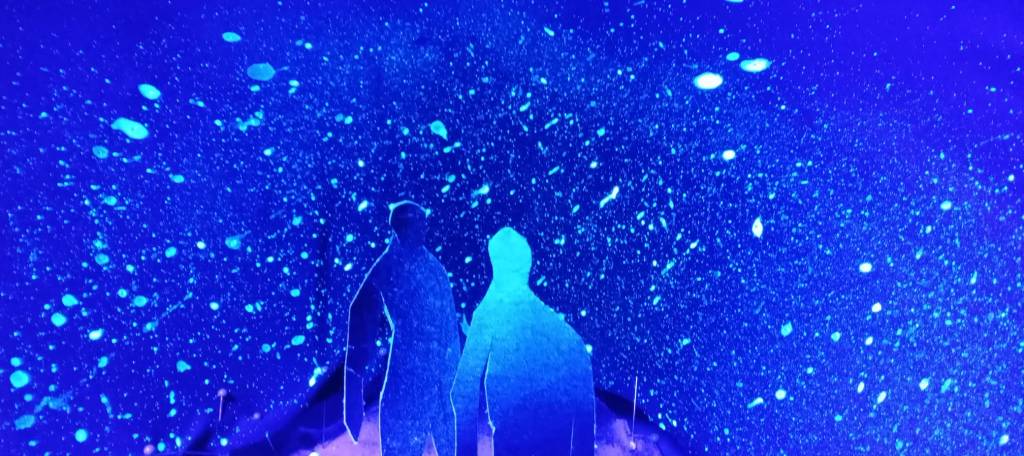
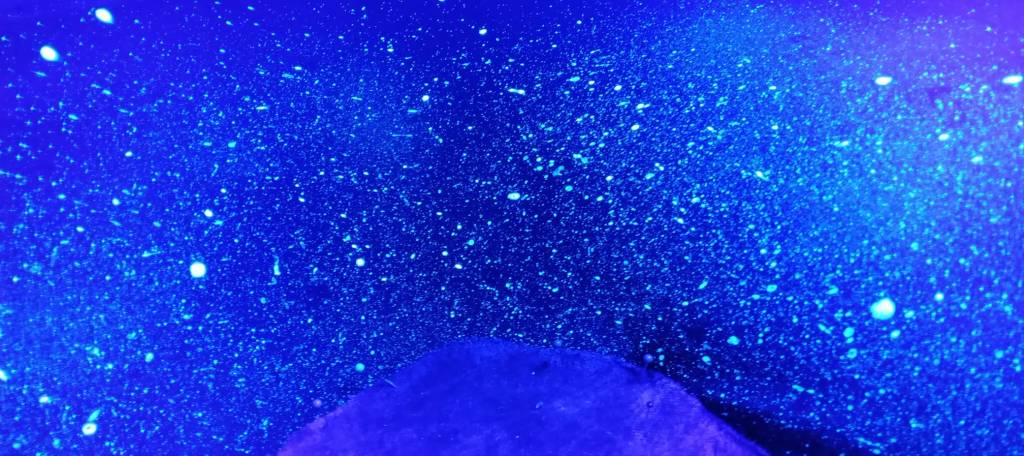
Pictures: testing UV paint on the backdrop cloth. (The image appears blue, but without UV light and in reality, it is black)
Thoughts around creating the universe through our scenography:
- UV painted stars on the floor and backdrop. UV lighting illuminates this and creates a sky at night revealing the deep universe. The effect is only valid when pitch black, and this helps us to decide when it can be used dramatically within the arc of the show.
- We create a closed circular environment by covering it with a backdrop. By having a covering that is 360 degrees around we use a dome effect, giving the sense that we are floating in space surrounded by stars and galaxies. Outside of the backdrop, we will discreetly place multiple speakers and subwoofers. There will be lights on the floor to help the participants see where they can be. We will test tulle or some other thin and see-through material that does not block the sound environment, that also will allow possibilities for projecting images onto. Also, the layers of tulle-like material could create a feeling of depth of a vast universe. We imagine creating a cloud of galaxies with paint and lighting on the layers of material.
- Paint a floor or backdrop with different colours to make it visible and invisible depending on the scene and how we want to support the dramaturgy. Lighting will also play a role in forming the atmosphere. This way, we could create various images on the floor for the different scenes: the sun setting, the aurora lights, Saturn’s rings etc.
- Props. Creating different miniature planets/stars and testing different types of material to create the texture of the surface of the planets. We will also try to put a small Bluetooth speaker inside the planets to create an effect that the planet is talking or making a sound. Can this be handed around so the participants can actually hold or touch them?
- Try to project images on the floor and walls. We will have and test two projectors hanging from the ceiling and project images on the floor and the walls.

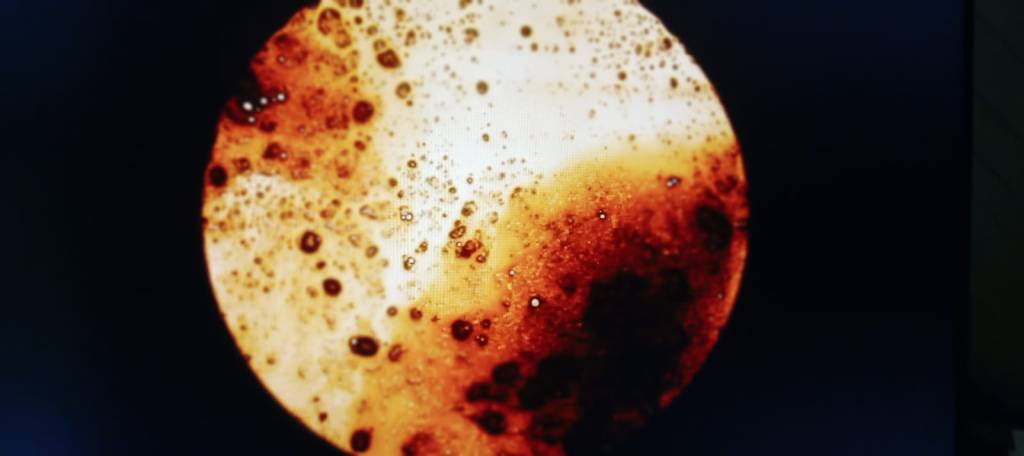
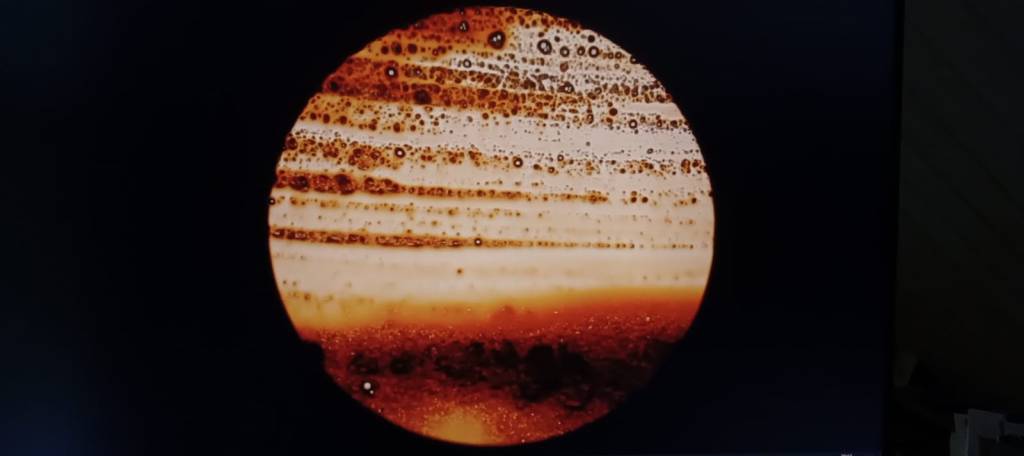
Pictures: effects Marta experimented with, using an overhead projector projecting watercolour and gelatine.
Animator Amanda Casanellas will create images and animations representing planets, galaxies, and stars. We aim to grab their curiosity as well as enlighten the children through finding new and inventive ways to create these worlds and environments. We question how this moving image can support the performance with learning and storytelling, be curious and exciting enough to keep people engaged and immersed.
Marketing strategies
The project is working with venues and partners that are in keeping with our main target participants and audiences: Barnens Scenen, Dunkers, and Barbacka already have a strong and substantial focus on working with and for young people. Our marketing and outreach will lean very much on what they already have in place, but additionally our project will work with them in developing how our projects themes can be fully integrated into supporting an interesting marketing campaign. With them, this project looks to understand how to build on their existing network of schools, and in what way our workshop/performance can include these children. Our initial approach is to provide short visiting workshops that can be provided weeks before the premiere workshop/performance happens on stage. In this way we are able to already allow ways for the children to connect with and know about the show and it’s themes, so that when they attend the actual workshop/performance on stage they are already feeling safe and excited to take part. These ‘pre-workshops’ can be multiple and happen over time, so that the children build momentum towards the final experience. This would also be a way to safeguard the children by allowing them to get to know the dancers who are leading the show. We will enquire if the teachers of these children can also include space-science in their current curriculum, so that there is ongoing support around this area that prepares them for taking part. Other forms of marketing will include online, and in print, through relevant news and social-media platforms.
Outside of our marketing and outreach for the target group, we want to create a real presence in the cultural community by revealing the work-in-progress and creative process of our artistic collaborations on social-media. A photo/video shoot in spring 2024 will document the project for future educational, promotional and archival purposes. Nya Rörelsen will promote through our website, newsletter, social media platforms and the network of our 5 current members.
Project’s time plan
2023
August – October
Apply for different grants. (KUR, Region Skåne, Malmö Stad, Idéer för livet, Crafoordska Stiftelsen, Sparbanks Stiftelsen)
September – November
Workshop with children with function varieties. Collaboration with Allaktivitets hus and Lindängen särskolan. I will work with dancers (Khamlane Halsackda, Nidia Martínez Barbieri & Isabella Eriksson) and go and give workshops to children with function varieties. I will coordinate the schedule and groups of children with a contact person, Armin Yktay-Farahmand (Allaktivitetshus). I will prepare workshops modified for each group’s needs, including a number of exercises, music, and visual help from the pedagogical website. We will also formulate strategies (verbal and physical instructions) to guide them to move their body. The workshops will be documented thoroughly for the show’s development later on.
September – December
Marketing. I will publish news and progress on social media regularly. 1-3 times a month.
2024
January – April
Apply for different grants for another chance if necessary.
March – April
Creation and test period for scenography and animation. The scenographer, Marta, will create a model of the scenography. She will try painting on the floor and backdrop, and we will test together with lighting. She will also create test props; a miniature planet. Then after the decision, she will calculate the backdrop and floor measurements and order all the materials.
Me and animator Amanda will brainstorm together and develop the animation ideas. She will start creating some material.
I will meet with a costume designer, Mary-Anne Buyondo, to discuss the directions. She will start creating the costumes before the rehearsals with dancers in May.
April – May
Music production with Moncef and his team and rehearsal with dancers happen simultaneously. We will have three meetings in April before we start with the dancers. I will give directions on what kind of music we want to have in each scene. They will begin producing; some pieces should be ready for the rehearsal in May to develop further together.
The manuscript production with Stephanie will start in March-April, prior to the rehearsals with dancers in May. I will hand in the original manuscript to adjust.
Four weeks of rehearsals with all the artistic team will happen in May between weeks 19-22. Firstly We will go through scene by scene, focusing on to tryout and developing the music and manuscript, aiming to establish a good base with each scene’s needs and finding the right direction to grow. Secondly, we will set a version for children with function varieties. Based on the research in autumn 2023, we will select the scenes that worked best with them and start developing from there. At the same time, we will invite a sign interpreter to work with us and brainstorm and test how to integrate the interpretation. Thirdly we will try some scenography and props which are ready. We will play around with them and integrate them to base choreographies. Lastly, we will have a photo session/trailer production with costumes and scenography with the test audience. The promotion film and pictures will be useful to be ahead to start selling before the project’s premiere and also help to convince the venues in contact to have shows in autumn 2024 after the premiere.
July
Marta will finish all the scenography and props ready for the rehearsal start in August.
Amanda will finish the animations for the rehearsal starting in August.
August – September
First 2,5 weeks (weeks 32-34), we will focus on developing and solidifying the version for children with function varieties. Based on the rehearsal in May, we will continue creating the scenes with sign and audio interpreters. Dancers will try to learn the manuscript with sign language, and we will modify facts/information of our theme more simply to understand. Make decisions on exercises and physical guidance strategies scene by scene. Alongside the rehearsal, we test and complete music and props and modify them if needed.
Next 2,5 weeks (weeks 34-36), we will focus more on the whole version of the show. We will work on each scene. Refine dance materials of a duet and solos with newly written music, and learn and rehearse manuscripts. Revisit all the exercises we will do in the show and enhance them by changing or finding better ways to guide. We will brainstorm and integrate the props, scenography and animations in some specific scenes.
Week 37 We will test sound effects properly with multiple speakers and subwoofers. Then
we will do numerous run-throughs of both versions. We will invite some test audiences and refine and adjust the scenes.
Week 38 Premiere week
Continue run-throughs for both versions. We will have a photo session and filming. We will invite some people and do a press showing.
We will have a premiere and followed by more shows at Barnens Scenen.
Week 39, we will continue showing at Barnens Scenen. Two shows a day; in total, we will have ten shows.
From week 40 on, we will continue a small tour. We will perform four shows at Barbacka in Kristianstad and another four shows at Dunkers in Helsingborg.
 RUM I DANS