Artistic description
Ryokan and Me is an interdisciplinary performance and installation project rooted in the physical and poetic language of Japanese calligraphy. Through dance, calligraphy, visual art, sound and spatial composition, I want to create a work in which the body, the brush, the line and the space become different expressions of the same movement.
The project takes its starting point in Ryokan (1758–1831), a Japanese Zen Buddhist monk, poet and calligrapher who is beloved for his simple and deeply personal expression. I am not interested in creating a biographical work about Ryokan. Instead, I want to explore what Ryokan can mean to us today, and how his poetry, calligraphy and philosophy can encounter our own experiences.
The central idea of the work is “Ryokan and Me.” Together with calligrapher Rie Goto and artist and co-director Kunihiko, I explore three different personal perspectives on Ryokan. We come from different experiences, artistic practices and relationships to him. These perspectives will meet within the work, creating an artistic dialogue rather than a narrative about a historical figure.
From Research to Artistic Development
The project began with my desire to return to the Japanese calligraphy I encountered as a child and to investigate how its qualities could be translated into contemporary dance. For me, there is a strong physical connection between the calligrapher’s brushstroke and the dancer’s movement: direction, rhythm, balance, weight, acceleration, interruption, pressure and release.
I therefore wanted to understand calligraphy not only as a visual result on paper, but as a physical and embodied action.
During my research residency in Japan, this idea took on a new meaning. I studied the history of calligraphy and different stylistic traditions, visited the Calligraphy Museum in Tokyo, encountered contemporary calligraphy and met calligrapher Kyuyo Ishikawa. I also worked with Rie Goto, who introduced me more deeply to the techniques, materials and philosophy of calligraphy.
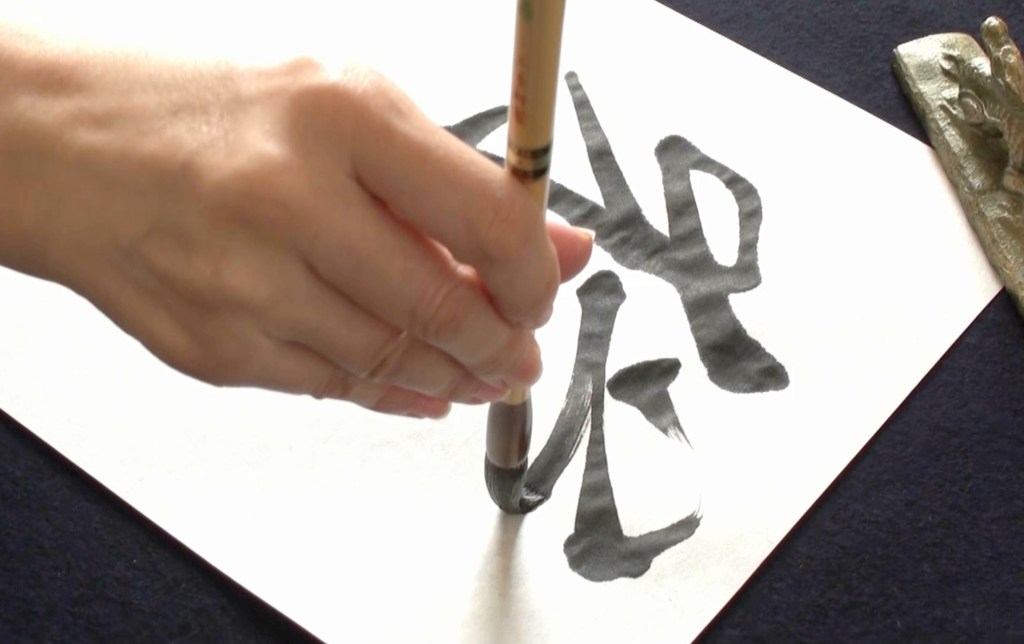
What changed my understanding most profoundly was the realisation that the brush does not simply create a line — the brush is an extension of the body. The calligrapher’s energy comes from the body and from its connection with the ground. Each brushstroke contains both movement and stillness, pressure and release, concentration and freedom. Even the space between two strokes carries meaning.
I therefore began to see calligraphy not as a two-dimensional art form, but as a three-dimensional and embodied practice. This experience has become an important foundation for my continued choreographic research.
Tradition and Freedom
Another central question that has emerged through the research is the relationship between tradition and freedom.
But why Ryokan?
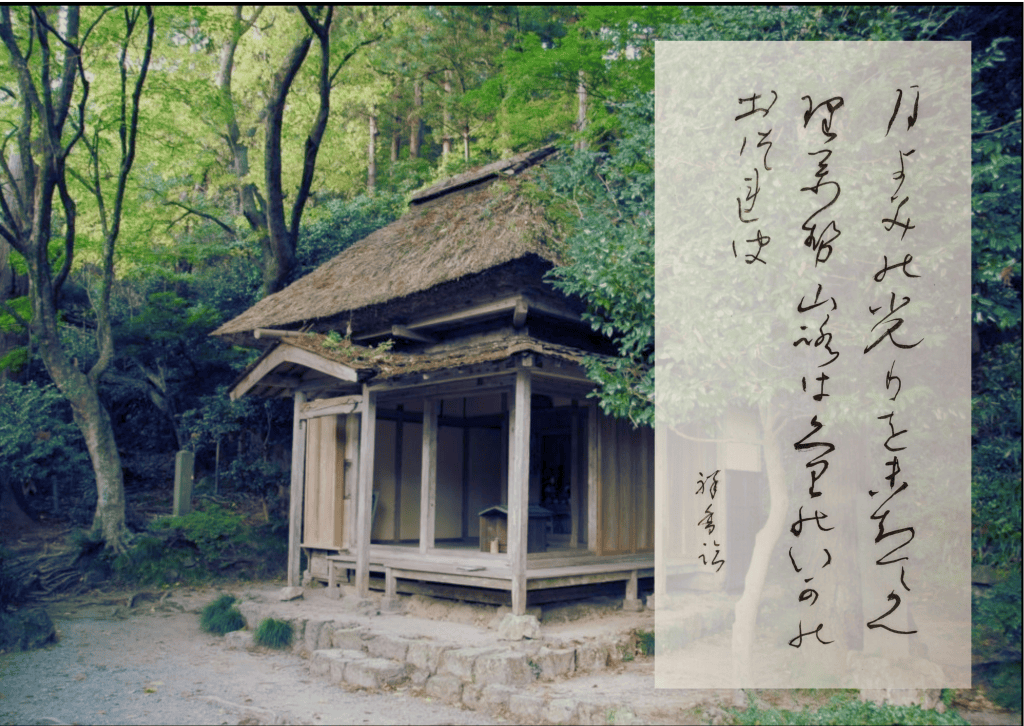
For me, Ryokan is not only a historical figure or a source of inspiration for the work. I feel a deep personal connection to his way of approaching life. He chose to leave the expectations and security of his wealthy family behind and devoted himself to a simple and unconventional life. After years of religious training, he chose not to establish his own temple, but instead lived simply in places such as Gogo-an, a small hermitage where he wrote poetry, practised calligraphy and spent time in nature and with the people around him.
What touches me most is the freedom he found within this simplicity. His life suggests that happiness and freedom do not necessarily come from having more, achieving more or following an expected path, but can emerge from letting go and finding one’s own way of living. His poetry and calligraphy carry this quality of openness, kindness, loneliness and freedom.
As a Japanese person, I recognise something deeply familiar in this way of thinking. At the same time, having lived and worked in Europe for most of my adult life, I encounter these ideas from a different cultural and personal position. Ryokan therefore becomes a kind of mirror through which I can reflect on my own life, artistic practice and understanding of freedom.
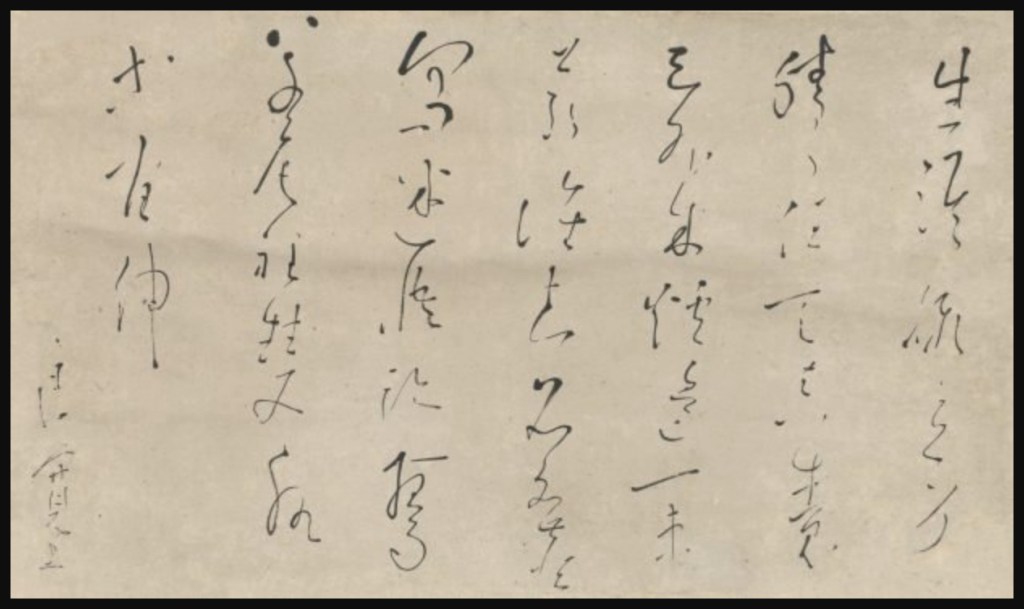
This connection is also reflected in the way Ryokan approached calligraphy. Calligraphy is rooted in tradition, technique and rules. At the same time, Ryokan developed a highly personal style rather than simply reproducing established forms. His mastery of tradition became a way of expressing his individuality.
This resonates with my own artistic journey.
I began learning traditional Japanese calligraphy as a child, where I was taught to follow rules and repeat the same characters until the form was correct. I now return to the same practice as a contemporary dance artist, after more than two decades of professional work in Europe.
The question is therefore no longer how to reproduce Japanese calligraphy, but:
How can a tradition become a source of freedom? How can I receive something that already has a history while at the same time creating my own expression?
This question is at the heart of Ryokan and Me. Through Ryokan, I want to explore not only the transformation of an artistic tradition, but also the possibility of finding one’s own path within — and sometimes beyond — the structures and expectations that shape us.
The Brush, the Body and the Trace
In the continued artistic process, I want to develop a choreographic method in which qualities of calligraphy are translated into the body.
I am exploring, for example, how a brushstroke can correspond to a physical trajectory; how pressure against paper can be translated into weight in the body; how a sudden change of direction can create a choreographic interruption; and how the empty space between two strokes can correspond to stillness.
In this sense, the body becomes another kind of brush.
The brush becomes an extension of the body. The body becomes a brush. Movement leaves a trace.
This trace can be physical, visual, or exist only in the memory of the audience. I want to investigate how the invisible trace of a dance movement can become visible through calligraphy, projection, animation or other visual materials.
Three Perspectives – Ryokan and Me
An important development following the research is that the project has found a clearer structure around three different perspectives.
I, Rumiko, approach Ryokan through the body, dance, my relationship to Japan and my experience of living between different cultural contexts.
Rie Goto encounters Ryokan through the tradition, technique, history and embodied practice of calligraphy. Her knowledge gives the project a direct connection to the living tradition of Japanese calligraphy.
Kunihiko, with whom I have collaborated on several previous artistic projects, joins the work as co-director and artistic collaborator. His broad artistic and technical knowledge is important to the visual development of the project, but his role extends beyond the technical. Our long-standing artistic relationship is based on an ongoing exchange of ideas, questions and perspectives, and he is an important partner in developing the structure and artistic language of the work.
Together, we want to explore what Ryokan evokes in each of us — not in order to find one definitive interpretation, but to allow three different perspectives to exist alongside one another.
Ryokan’s poetry and philosophy will form another layer of the work. Fragments of his texts may appear through voice, music, sound or as part of the visual composition. I want the words to be experienced more as poetic traces than as explanatory text.
From Stage to Gallery
An important part of the project’s continued development is that the work is not primarily conceived for a conventional theatre stage, but for galleries and alternative artistic spaces.
This is not simply a choice of presentation format. The space itself is part of the artistic investigation.
I want to create a work in which dance can be experienced as a living visual composition. The body, calligraphy, materials, sound, light and empty space will together create an environment that the audience can enter.
I want to work with a clean and contemporary visual aesthetic inspired by the materiality and principles of calligraphy rather than recreating a traditional Japanese environment. Paper, ink, stone, textile, light and projection may become elements within this world. Scent and other sensory elements may also be used to create a physical and memory-based experience.
The visual development will continue in collaboration with scenographer and visual artist Marta Cicionesi, with whom I have previously collaborated on the productions The Death and Life of Mr. O and KOSMOS. I also want to collaborate with Malmö-based costume designer Junko Kosaka, whose background in fashion and visual design opens up possibilities for exploring costume as an active part of the work’s visual and choreographic language.
Projection and digital elements will support the artistic composition rather than function as technology for its own sake. For example, I want to explore the possibility of having calligraphic brushstrokes created or projected in real time, meeting and responding to my movement, or allowing visual traces to develop in relation to the movement of the body.
Visual and Spatial Development
The visual and spatial language of Ryokan and Me will be developed through an ongoing dialogue between choreography, calligraphy, visual art and the specific spaces in which the work is presented.
A key aim is to create a production that can travel between galleries and other artistic spaces while remaining visually coherent. Rather than creating a fixed set, we want to develop a flexible spatial concept that can be adapted to the architecture, dimensions and technical possibilities of each venue. Questions such as how the three artists share the space, how the audience is positioned within it, and how many people the space can accommodate will therefore become part of the artistic and choreographic process.
We want to work with a restrained palette of materials connected to the physical practice of calligraphy and to the natural world: paper, ink, stone, reeds or other grasses, sand and rice. These materials will not be used to recreate a traditional Japanese environment, but as physical and visual elements through which we can explore traces, movement, impermanence and transformation.
Following the recent development of the project with visual artist and scenographer Marta Cicionesi, we are particularly interested in working with very light, air-permeable textiles, such as thin sailing cloth. The material could function as a surface for projection, while also being moved by air to create changing forms within the space. Together with silk and paper, such materials could respond to subtle air currents and extend the movement of the performers into the surrounding environment. Small, quiet fans placed within the space could make the materials move almost like an extension of the choreography.
Projection and digital elements will be used as artistic materials rather than as technology for its own sake. The specific technical methods through which movement and calligraphy can be transformed into visual traces will be explored in collaboration with Kunihiko Matsuo.
Another important area of development is how the calligraphy, poetry and philosophical ideas connected to Ryokan can be communicated to the audience. We want to avoid over-explaining the work, and instead investigate how words, written characters, sound, voice, images and physical materials can gradually reveal different layers of meaning. The relationship between what the audience sees, hears, reads and senses will therefore be part of the artistic research.
The final spatial form will emerge through the continued collaboration between the artists and through testing the work in different spaces. The aim is to create an environment that is simple, contemporary and visually precise, while allowing the materials, movement and traces to remain at the centre.
Digital & Projection-Based Artistic Research
A central part of the continued development of Ryokan and Me will be to investigate how digital technology can make movement and calligraphy visible as traces in space.
Together with Kunihiko Matsuo, I want to explore the use of a depth camera to capture the movement of my body in three dimensions. The captured movement can then be translated into a digital diagram and used as data for creating an animation. Rather than reproducing the dancer’s image, the aim is to transform movement into an independent visual trace — allowing the memory of the movement to continue beyond the body.
We also want to explore a parallel process with Rie’s calligraphy. By capturing the movement of her brush, we can investigate how the trajectory of the brush might generate a different kind of digital animation. This creates the possibility of developing two interconnected visual traces: one generated by the movement of the body and one by the movement of the brush. The two could then interact, overlap or respond to each other, creating increasingly complex visual compositions.
Another important area of research is the relationship between live calligraphy and projection. We want to explore capturing Rie’s calligraphy as she writes, potentially writing directly on the floor, and projecting the image live onto a screen or other surface within the space. In this way, the projected image would not simply document what has already happened, but become an active part of the performance and interact with the dancers and physical materials.
To develop the spatial and scenographic possibilities, we plan to experiment with one to two projectors positioned from different angles, allowing images to extend across different surfaces within the gallery. Projection could therefore move beyond a conventional screen and become part of the architecture of the space, interacting with the body, calligraphy, fabric and other materials.
The purpose of this technical research is not to introduce technology for its own sake. Rather, we want to ask how digital tools can extend the fundamental artistic idea of the project: how movement becomes a trace, how a brushstroke becomes movement, and how an invisible physical action can continue to exist in another form.
The exact technical solutions will be developed and tested during the artistic process, in dialogue with the spatial conditions of each venue.
An Installation That Comes Alive
At this stage, I envision the live performance lasting approximately 30–40 minutes, while the visual installation can remain accessible for a longer part of the day.
This allows audiences to encounter the work in different ways. They can enter the space before or after the performance, stay, move around, sit or simply observe. The conventional boundary between stage and audience becomes less defined.
I want to create a place where the audience does not only see dance, but can also experience material, space, sound and scent — and where movement has the possibility of leaving traces within the space.
The project is still in an artistic development phase, and the spatial and visual form will be further explored through the collaboration with Marta Cicionesi, Kunihiko Matsuo and the other artists involved.
A Meeting Between Past and Present
At its core, Ryokan and Me is about an encounter between past and present, tradition and personal freedom, the Japanese and the European, the visible and the invisible.
By returning to calligraphy, I am also returning to a part of myself that existed before my professional dance career began. But I am not returning in order to recreate the past. I am returning to discover what can emerge when an ancient tradition passes through a contemporary body.
I want to create a work that does not attempt to explain Japan or Ryokan to a Swedish audience, but instead opens a space for personal associations and questions.
What happens to a tradition when it moves through another body? What remains when the form changes? Where is the boundary between preserving and transforming? And how can we find freedom within — or through — something that already has a history?
These are the questions I want to continue exploring through Ryokan and Me.
Artistic Collaboration
Ryokan and Me brings together distinct artistic languages—dance, calligraphy, poetry, scenography, costume, sound and digital media—to create a shared space where body, movement, material, image and gesture can meet and transform one another.
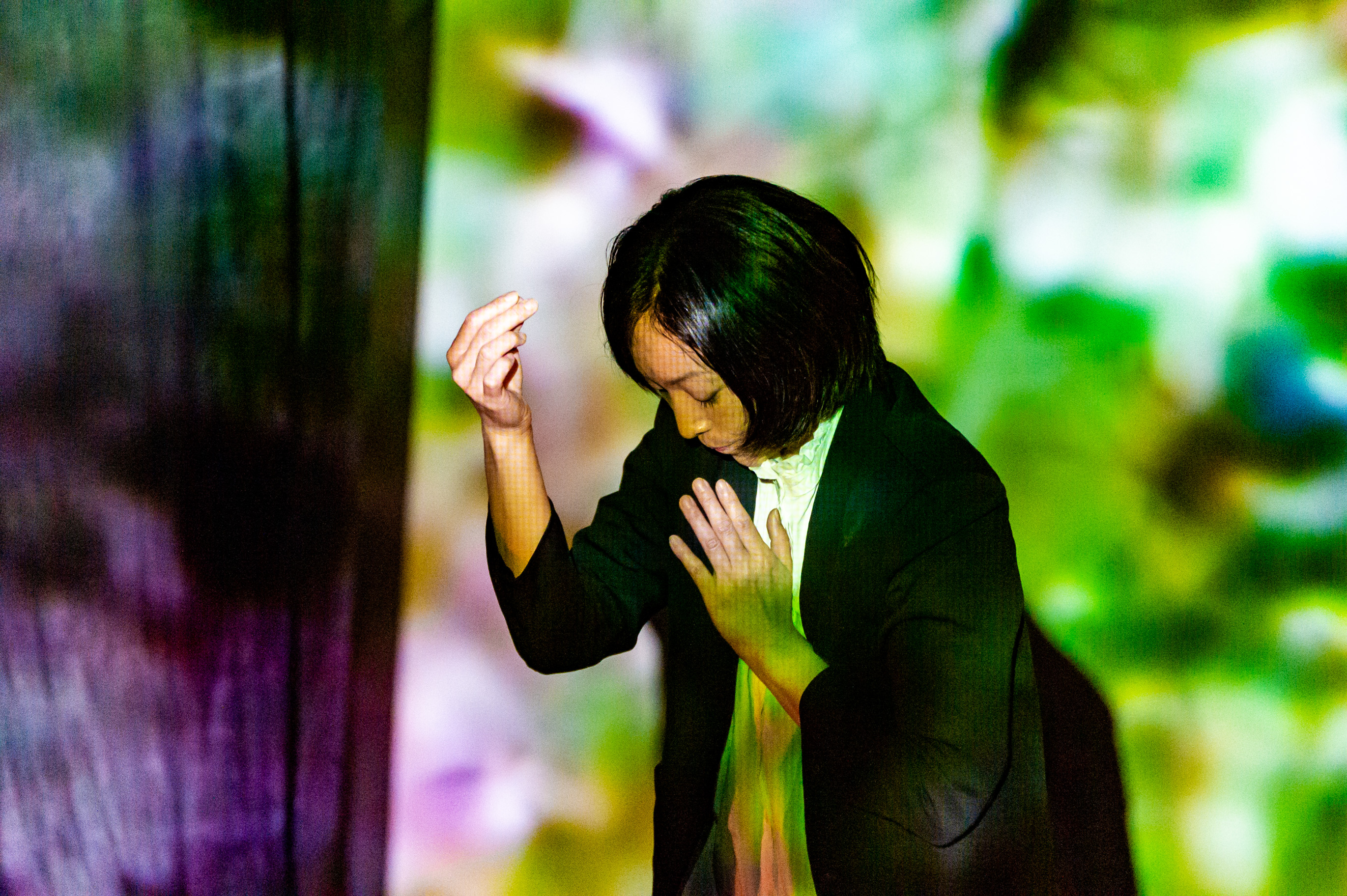
Rumiko Otsuka – Choreographer & Dance Artist
Rumiko Otsuka is a Japanese dance artist, choreographer and educator based in Malmö where she lived and worked for over 20 years. Trained at Tokyo City Ballet and Arnhem Dans Academie, she has worked professionally with, among others, Norrdans, Skånes Dansteater and Zappalà Danza. Since 2009, she has worked independently as a performer, choreographer and facilitator, developing projects that explore the relationship between body, perception, space and other artistic forms.
Her practice combines contemporary dance with somatic approaches and interdisciplinary collaboration. She has developed performances, workshops and participatory projects through her independent practice and, since 2024, through RUM I DANS, an organisation focusing on dance, artistic development and education.
In Ryokan and Me, Otsuka initiates and leads the artistic research, bringing together dance, Japanese calligraphy, visual and spatial practice to explore how Ryokan’s poetry and philosophy can be embodied through movement. >> https://rumidans.com/rumiko-otsuka/
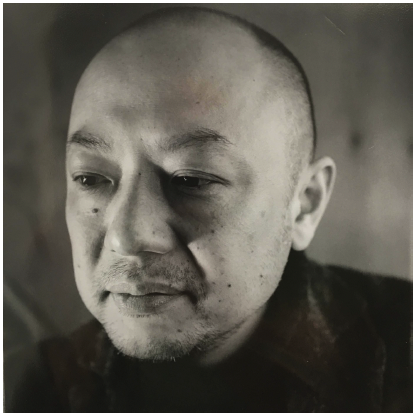
Kunihiko Matsuo – Media Artist, Director & Performer
Kunihiko Matsuo is a multimedia artist, director, performer and dancer based in Tokyo, working at the intersection of contemporary dance, technology and audiovisual design. In 1992, he joined the intermedia performance unit nest, developing work as a dancer, conceptual designer and sound designer. Since 1998, he has developed CMprocess, a methodology for generative performance that explores network-based collaboration and real-time interaction between different artistic and technological elements.
His work brings together performing arts, digital media and design, creating systems in which unexpected images and relationships can emerge through live exchange. His practice has received international recognition, including the DiVA2003 Prize in Tokyo and first prize in the international competition The Presence of Time – City Architecture Art for Braunschweig in 2004. He is also a board member of the Odisha Biennale, India. >> https://cmprocess.com/outline/
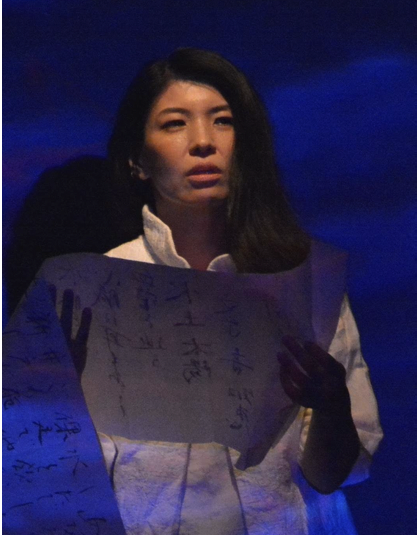
Rie Goto / Tohku – Poet, Calligrapher & Seal Engraver
Rie Goto, also known as Tohku (桃空), is a poet, calligrapher, seal engraver and performing artist based in Tokyo. Her interdisciplinary practice brings together poetry, calligraphy, performance and visual art, and she has collaborated with artists across dance, music and visual arts in Japan and internationally, including projects in Paris, Taipei, Bhubaneswar and Faro.
Her artistic and academic research focuses on the relationship between gesture and perception in calligraphy. In 2021, she presented her research Imitation and Creativity in Calligraphy – Gesture and Perception and holds an M.A. from Meiji University. Her work has been presented at numerous exhibitions, festivals and poetry events, and in 2019 she was awarded the Grand Prix at the International Poetry Festival in Romania.
In Ryokan and Me, Goto brings together her experience of poetry, calligraphy and embodied gesture, exploring how the movement and rhythm of the brush can become a physical and performative language. >> https://www.youtube.com/user/roiku61/playlists
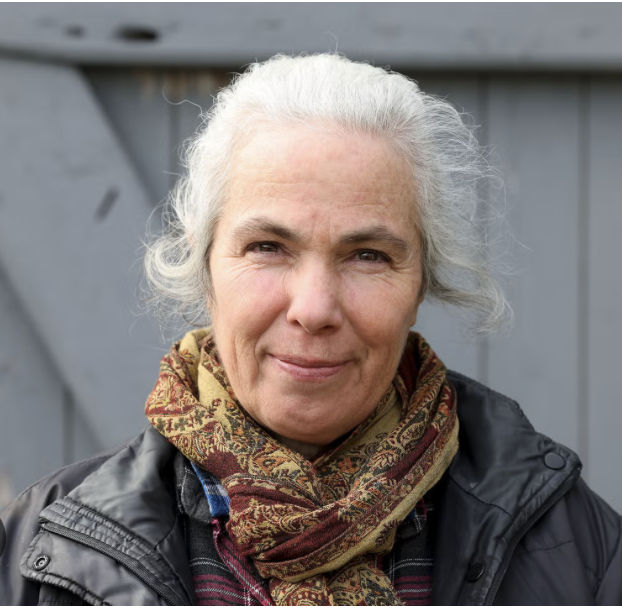
Marta Cicionesi – Set Designer & Scenographer
Marta Cicionesi is an Italian-Swedish set designer and scenographer based in Sweden. Born in Italy and raised in the international community of Auroville, India, she has lived and worked in Sweden since 1985. She graduated from the State Art Institute of Florence and has developed an extensive artistic practice in theatre, film and interdisciplinary performance.
Since the early 1990s, Cicionesi has collaborated with theatre and performance artists in Sweden and internationally, creating scenography for numerous productions each year. Her work has been recognised with several Swedish arts grants and awards, including the Skillinge Theatre Culture Prize and the Thalia Prize. She has also participated in international artistic residencies and cultural exchange projects in France, Finland and India.
Her scenographic practice is rooted in a strong interest in space, materiality and the relationship between performer, object and environment. In Ryokan and Me, she develops the spatial and material world of the performance, creating an environment in which movement, calligraphy, projection and the audience can meet. >> https://scenograf.nu
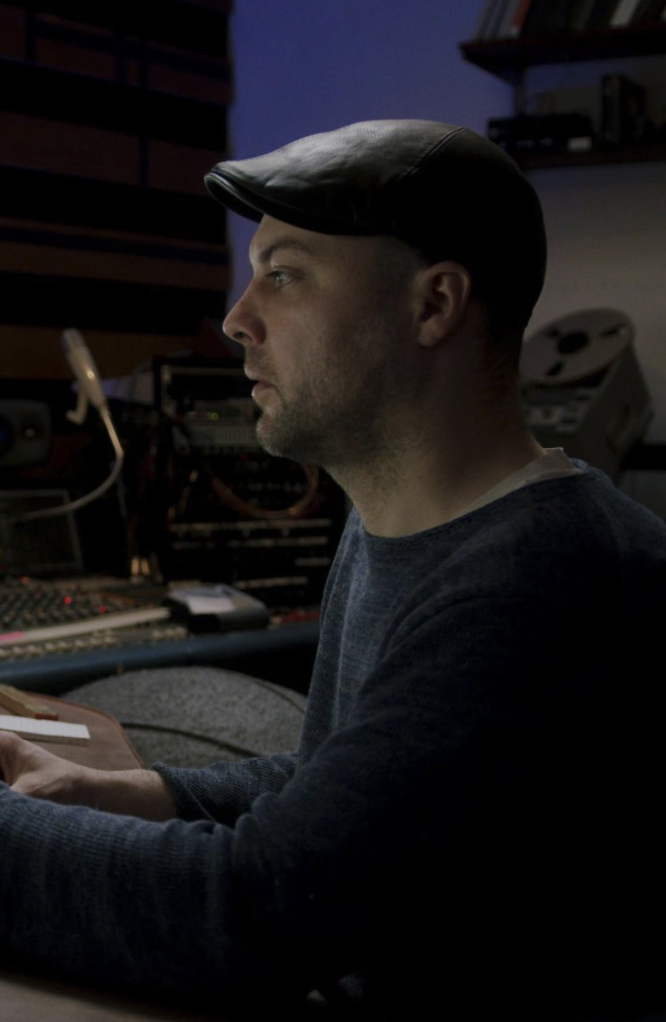
Silas Bieri – Sound Designer, Composer & Technical Director
Silas Bieri is a Swiss-born sound designer, composer and technical director based in Malmö. He began studying cello at the age of five and went on to explore a wide range of instruments and electronic sound production. After training as a sound engineer, he developed an international career working across sound design, composition, film, dance, theatre and live performance.
Over more than 20 years, Bieri has collaborated with artists and productions across Europe and internationally, including as technical director and sound and light designer for the Raimund Hoghe Company, and as composer and sound designer for dance and theatre productions. His multidisciplinary technical practice has also expanded into stage and lighting design.
Since 2015, Bieri has been the owner and technical director of in-discourse AB in Malmö, where he works primarily with sound engineering and design for creative and non-standard productions. In Ryokan and Me, he contributes to the development of the sonic and technical environment, connecting sound, space, movement and the performance’s visual elements. >> https://www.linkedin.com/in/silas-bieri-8b479b41/
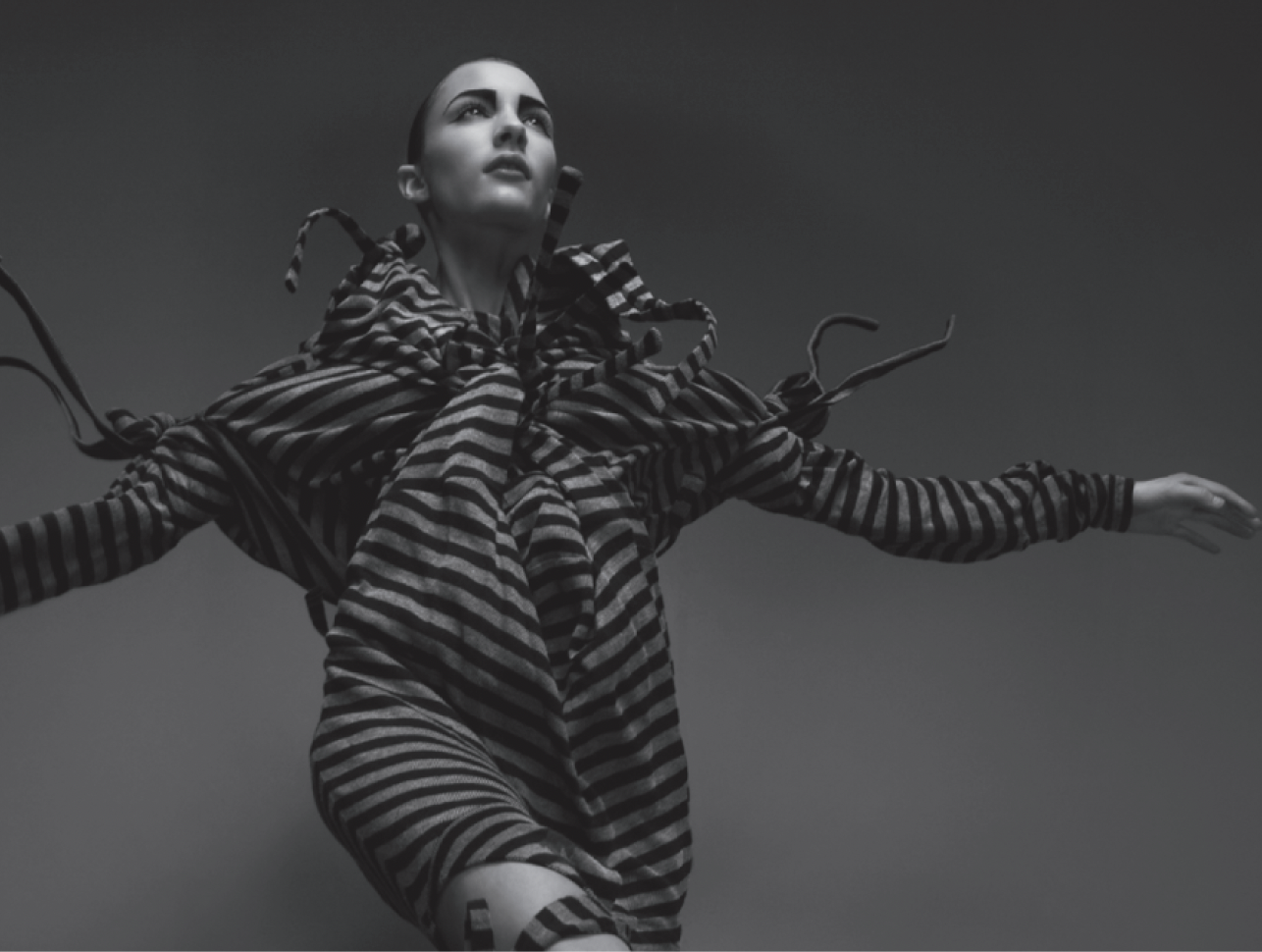
Junko Kosaka – Costume & Textile Designer
Junko Kosaka is a Japanese-Swedish designer based in Malmö, working across fashion, costume, textiles, graphic design and art direction. She holds a BFA in graphic design from Kanazawa College of Art and a Diploma in Fashion Design from Berlin University of the Arts, where she graduated from the class of guest professor Vivienne Westwood. She has worked internationally with fashion and design, including as a patternmaker and designer for Tao Comme des Garçons and Tricot Comme des Garçons in Tokyo.
Her multidisciplinary practice explores the relationship between the body, material, form and visual expression. Alongside fashion and product design, she has developed stage costume for dance, including costume work for Hiroyuki Umeda’s Holistic Strata installation. She currently works as an independent designer in Malmö and Japan, collaborating with brands and creative projects across different fields.
In Ryokan and Me, Kosaka develops the costume as an integral part of the performance’s visual and physical language, exploring how fabric, form and the moving body can interact with the scenographic environment. >> https://junkokosaka.myportfolio.com/

